45 Dark Sky Reserves and the Best Stargazing Spots on Earth
A map of 45 certified dark-sky places and legendary astronomy sites, from the Atacama to a Japanese town that renamed itself after the stars. Where the Milky Way still looks the way it did before electric light.
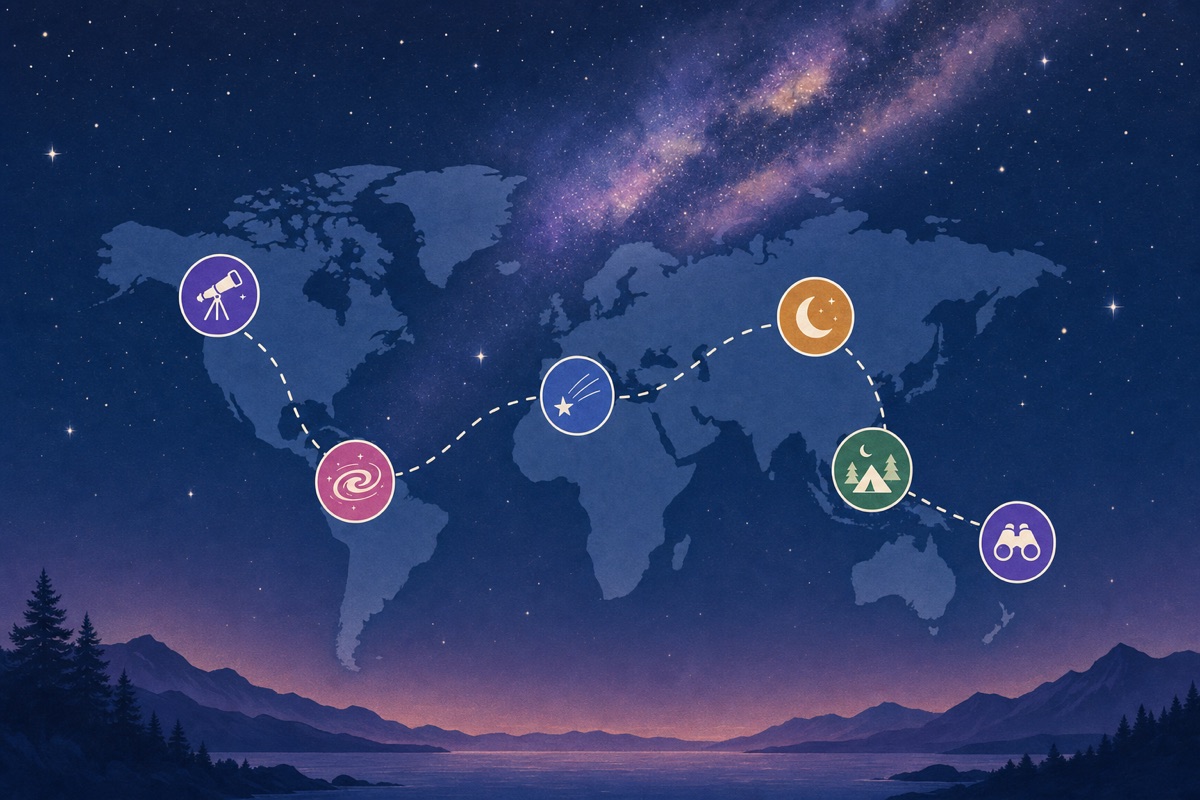
Most people alive today have never seen the Milky Way. Not "haven't looked at it properly," have literally never seen it, because the sky above their home is too bright. Light pollution has erased it for around a third of humanity, and for something like 80% of North Americans and Europeans. The galaxy we live in is invisible from where we live.
The good news is that the dark places still exist, and someone has been keeping a list. This map gathers 45 of them: certified dark-sky reserves, legendary observatories you can actually visit, and a few spots that aren't certified at all but have skies that make astronomers emotional.
What "certified dark sky" actually means
DarkSky International (you may know it under its old name, the IDA) certifies places that meet strict darkness standards and, just as importantly, commit to keeping them dark. Towns swap their streetlights for shielded warm ones, parks limit lighting, and sky brightness gets measured regularly. A certification isn't a vague tourism label. It means that on a clear moonless night, you will see thousands of stars, the Milky Way as a bright band with visible structure, and if you're lucky, the faint glow of the zodiacal light.
That's why the label matters when you're planning a trip around it. "Dark" on a map of light pollution can still mean a milky grey horizon. Certified means the real thing.
The deserts, where the sky gets serious
If you want the best skies on the planet, you go where the air is dry and thin. San Pedro de Atacama in Chile sits in the driest desert on Earth, surrounded by world-class observatories for a reason, and the Elqui Valley further south became the world's first International Dark Sky Sanctuary. The NamibRand reserve in Namibia offers the same caliber of sky with dunes instead of altiplano. And Israel's Ramon Crater is the one people forget: a huge erosion crater in the Negev with a certified dark sky and a town, Mitzpe Ramon, built right on its rim.
The observatory pilgrimages
Some places on this map are less about lying in the grass and more about standing where astronomy happens. The visitor station on Mauna Kea in Hawaii sits at 2,800 meters, above a good chunk of the atmosphere. La Palma in the Canary Islands hosts one of the largest telescopes in the world and has protected its skies by law since the 1980s. At Pic du Midi in the French Pyrenees you can take a cable car up and actually sleep at the summit, with the observatory to yourself after the day visitors leave. And Mount John above Lake Tekapo in New Zealand anchors one of the largest dark sky reserves anywhere, with the southern Milky Way, which is honestly the better half.
The accessible weekend ones
You don't need a flight to the Atacama. Cherry Springs State Park in Pennsylvania is the classic US East Coast dark spot. Galloway Forest in Scotland and the Brecon Beacons in Wales are both certified and reachable in an evening from most of the UK. Westhavelland is about an hour from Berlin, which still surprises people. And the Alqueva region in Portugal built an entire dark-sky tourism route around its certified skies, with wine tastings between observation sessions, because Portugal.
Japan's dark corners
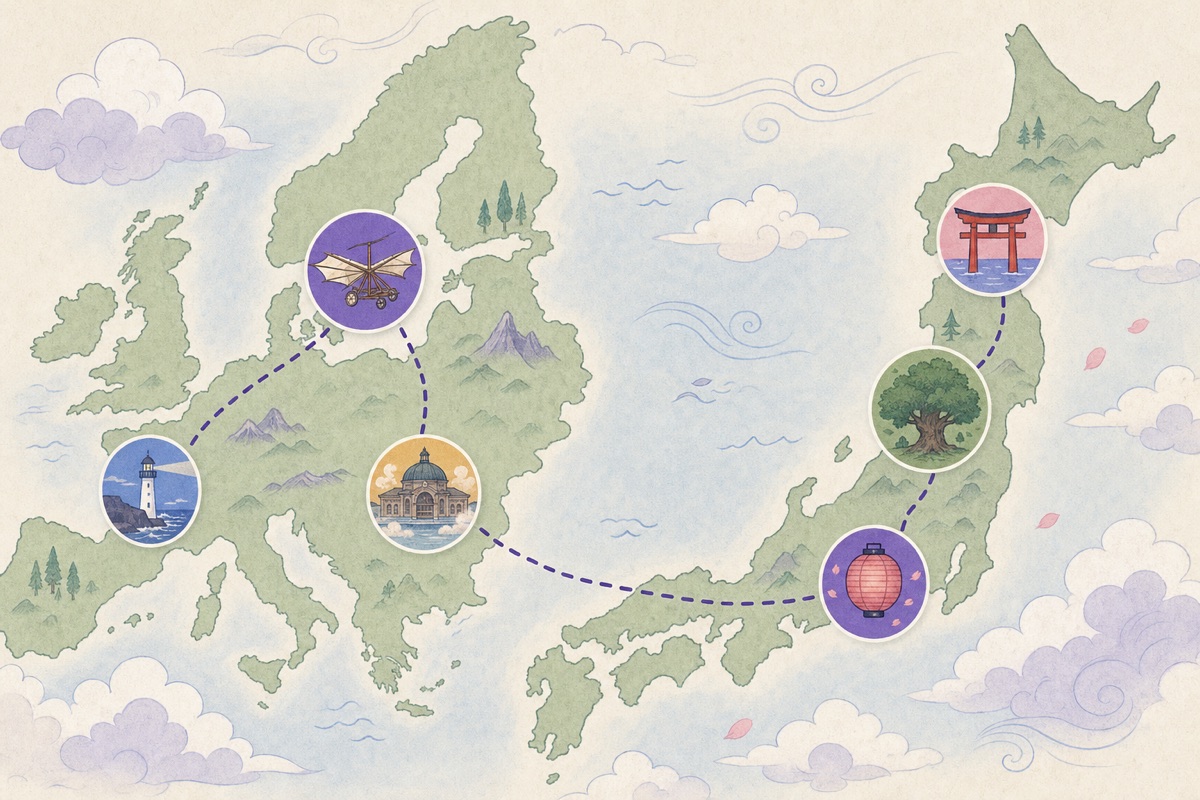
Japan is one of the most light-polluted countries on Earth, and that makes its dark spots feel almost secret. Iriomote-Ishigaki in Okinawa was the country's first certified dark sky park, far enough south to see stars that never rise over Tokyo. Kozushima, a small island a ferry ride from Tokyo, got certified after replacing every streetlight on the island. And then there's Bisei in Okayama, a town that renamed itself "beautiful stars" decades ago and has been protecting its night sky since 1989, long before it was fashionable.
Aurora country
One entry plays a different game entirely. Abisko in Swedish Lapland sits in a rain shadow that gives it unusually clear skies for the Arctic, which is why it's considered one of the most reliable places on Earth to see the northern lights. Dark skies are the baseline there; the show is overhead.
A few practical notes
Timing matters more than gear. Go around the new moon, because even a half moon washes out the Milky Way. Know your season: the bright core of the galaxy is a summer object in the northern hemisphere (roughly March to October, best around June to August) and winter skies trade it for crisp views of Orion. And when you arrive, put the phone away and give your eyes twenty minutes. Real dark adaptation takes that long, and the sky at minute twenty is a different sky from the one at minute two.
Finding your kind of dark
Every spot on the map is tagged, so you can filter by what you're after: #reserve for the certified dark-sky places, #observatory for the ones with telescopes and visitor programs, #aurora for the far north, and #southern-sky for the spots where you'll see the Magellanic Clouds and the good half of the Milky Way.
The map is free to browse, and if you're logged in you can copy the whole thing into your own account and start building a trip around it. Pick one within reach, check the moon phase, and go see what the sky looked like before we lit everything up.
Start your own map
Save the places you want to visit, organize them your way, and plan the trip, free.