The Real Places Behind Ghibli Films, From Yakushima to Colmar
Studio Ghibli's worlds feel invented, but many of them started somewhere real. Here are 38 places across Japan, Taiwan and Europe that inspired the films, on one map, with the official connections and the fan legends clearly told apart.
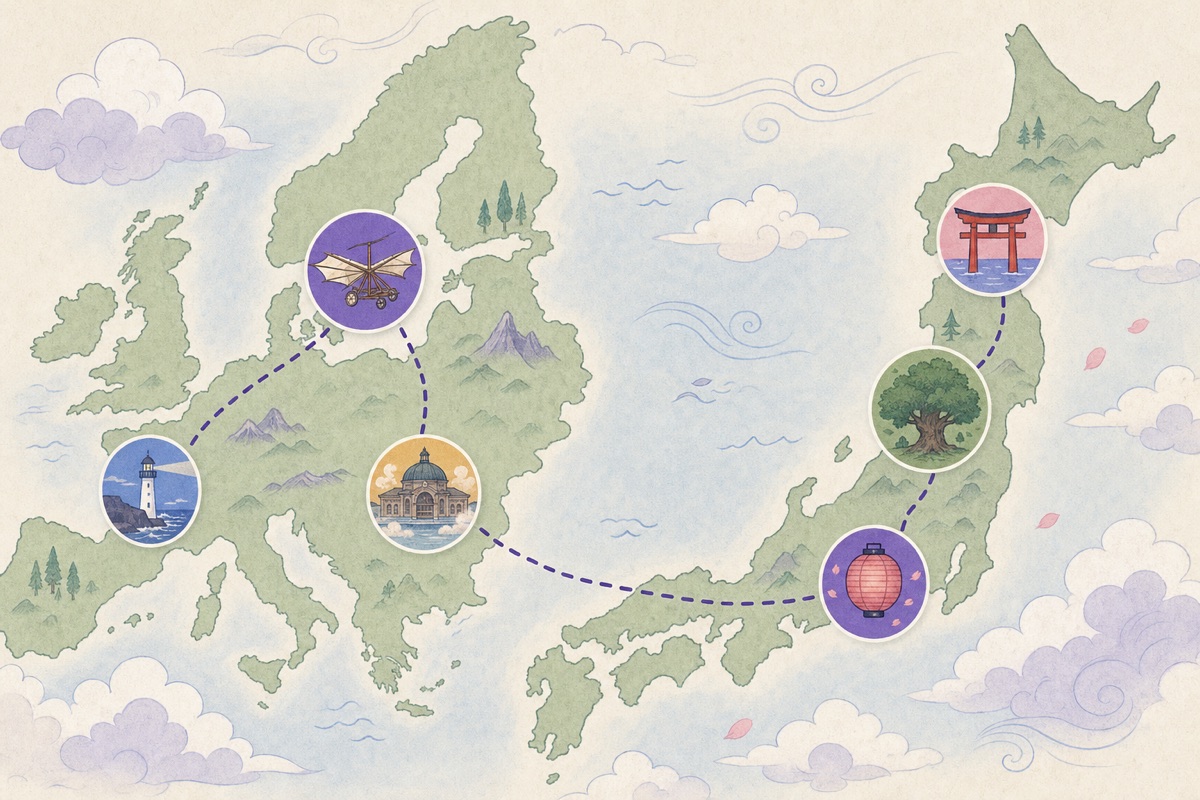
Studio Ghibli films feel like they take place nowhere on Earth, which is exactly why it's so startling to stand somewhere and recognize one. A mossy boulder on Yakushima, a wooden bathhouse glowing at dusk, a hillside shopping street in western Tokyo. I've lived in Japan for years and I still get that little jolt every time.
So I made a map: 38 places across Japan, Taiwan and Europe with a real connection to the films. Some connections are officially acknowledged by the studio, some are well-documented pieces of production history, and some are pure fan legend. The map tells them apart honestly, and so will this article.
The bathhouses of Spirited Away
No Ghibli building gets hunted down more than Yubaba's bathhouse, and the honest answer is that it's a collage. Miyazaki drew from several real onsen rather than one.
Dogo Onsen in Matsuyama is the one most often cited, a maze of wooden wings and watchtowers that has been operating since long before Meiji. Sekizenkan in Gunma's Shima Onsen, with its red bridge leading to a 1691 main building, is the other widely credited inspiration, and crossing that bridge at dusk is about as close to the film as the real world gets. I'd add Kanaguya in Shibu Onsen, a nine-story wooden ryokan that looks like it was drawn rather than built, and Ginzan Onsen in Yamagata, which has no confirmed link at all but at night, with gas lamps reflecting on the river, you'll stop caring.
The Jiufen story, told honestly
Then there's Jiufen, the hillside teahouse town in Taiwan whose lantern-lined stairs have become shorthand for Spirited Away. It's plastered on every travel feed, and here's the uncomfortable truth: Miyazaki has flatly denied that Jiufen was an inspiration. The resemblance is real, the connection is not.
I kept it on the map anyway, tagged as fan-attributed, because Jiufen is genuinely magical on its own terms and because the story of how a rumor became a pilgrimage is part of Ghibli geography now. Go for Jiufen, not for the film.
Totoro's forest is real, and you can walk it today
This one is the opposite of Jiufen: fully acknowledged. The Sayama Hills, straddling Tokyo and Saitama, are the landscape Miyazaki based My Neighbor Totoro on, and he has backed the Totoro no Furusato foundation that buys up parcels of the woodland to protect it. The trails are quiet, the satoyama scenery is exactly the film's, and at Kurosuke's House, an old farmhouse the trust maintains, a large Totoro waits inside. It's an easy half-day from central Tokyo and almost nobody goes.
Mononoke's moss forest on Yakushima
For Princess Mononoke, the team traveled to Yakushima, and the Shiratani Unsuikyo ravine is the acknowledged model for the forest of the shishigami. Thousand-year-old cedars, every surface upholstered in moss, mist that arrives on schedule. It's a real hike, a few hours minimum, and it rains constantly. Bring proper shoes and accept that you will get wet. It's worth it.
The everyday Tokyo of Whisper of the Heart
Seiseki-Sakuragaoka, a modest neighborhood on the Keio line, is the acknowledged setting of Whisper of the Heart, and the town leans into it gently: there's a signposted walking course past the hilltop rotary, the shrine, and the stairs Shizuku climbs. No spectacle, just the pleasure of watching an ordinary suburb match an animated one, frame by frame.
Ponyo's fishing town
Tomonoura, a small port on the Seto Inland Sea, is where Miyazaki stayed for two months while conceiving Ponyo, and it's well documented. The harbor with its Edo-period lighthouse looks unchanged, the alleys smell of the local homeishu liqueur, and the whole town runs at Ponyo's pace.
Europe: Kiki and Howl
Ghibli's Europe is real too. Visby, the walled Hanseatic town on Gotland, and Stockholm's Gamla Stan are the widely reported models for Kiki's seaside city of Koriko. For Howl's Moving Castle, the team looked to Alsace: Colmar above all, plus the storybook villages of Riquewihr and Eguisheim, all half-timbered houses and improbable colors. These are reported production inspirations rather than plaque-on-the-wall official sites, and the map tags them accordingly.
And for Laputa, the green mining valleys of South Wales, which Miyazaki visited around the miners' strike, shaped Pazu's town more than any single building did.
The two official destinations
Finally, the places Ghibli actually built: the Ghibli Museum in Mitaka and Ghibli Park near Nagoya. Both are wonderful and both require advance tickets, often weeks ahead, with no same-day sales. Book before you plan the rest of the day around them.
One map, filtered by film
Every spot on the map is tagged by film: #spiritedaway, #totoro, #mononoke, #kiki, #howl, #ponyo, #laputa, #whisper. Spots with an acknowledged connection also carry #official. Tap a hashtag in Ikuzo and the map filters instantly, so you can look at just the Spirited Away bathhouses, or just the officially confirmed places, and hide the legends.
The map is public and free to browse, and if you're logged in you can copy the whole thing into your own account, then trim it down to your route. Most trips can fold two or three of these places in without a detour. That little jolt of recognition is waiting.
Start your own map
Save the places you want to visit, organize them your way, and plan the trip, free.