
How to Plan a Trip Over Months, Not Days
The best trips aren't planned in a frantic week before departure. Here's how to collect places over time and turn them into a trip you'll actually take.
Most people plan a trip the same way: they block off a weekend a few weeks before departure, open twenty browser tabs, and try to cram a country into a spreadsheet. By the time they leave, half the good ideas are forgotten and the itinerary is a stressed-out guess.
There's a calmer way. The travelers who come back saying "that was the best trip of my life" almost never planned it in a week. They collected it slowly, over months, sometimes years. A restaurant a friend mentioned. A temple from a film. A neighborhood a stranger raved about on a forum. By the time they booked flights, the hard part was already done.
This guide is about that approach, and how to make it practical instead of chaotic.
Start a map, not a list
A list of place names is almost useless six months later. "Blue Bottle Kyoto" tells you nothing about where it is or whether it's near anything else you wanted to see.
A map fixes this instantly. The moment you drop a pin, the place has context: it's in this neighborhood, near that station, a ten-minute walk from the other thing you saved. You stop collecting names and start collecting geography, which is what a trip actually is.
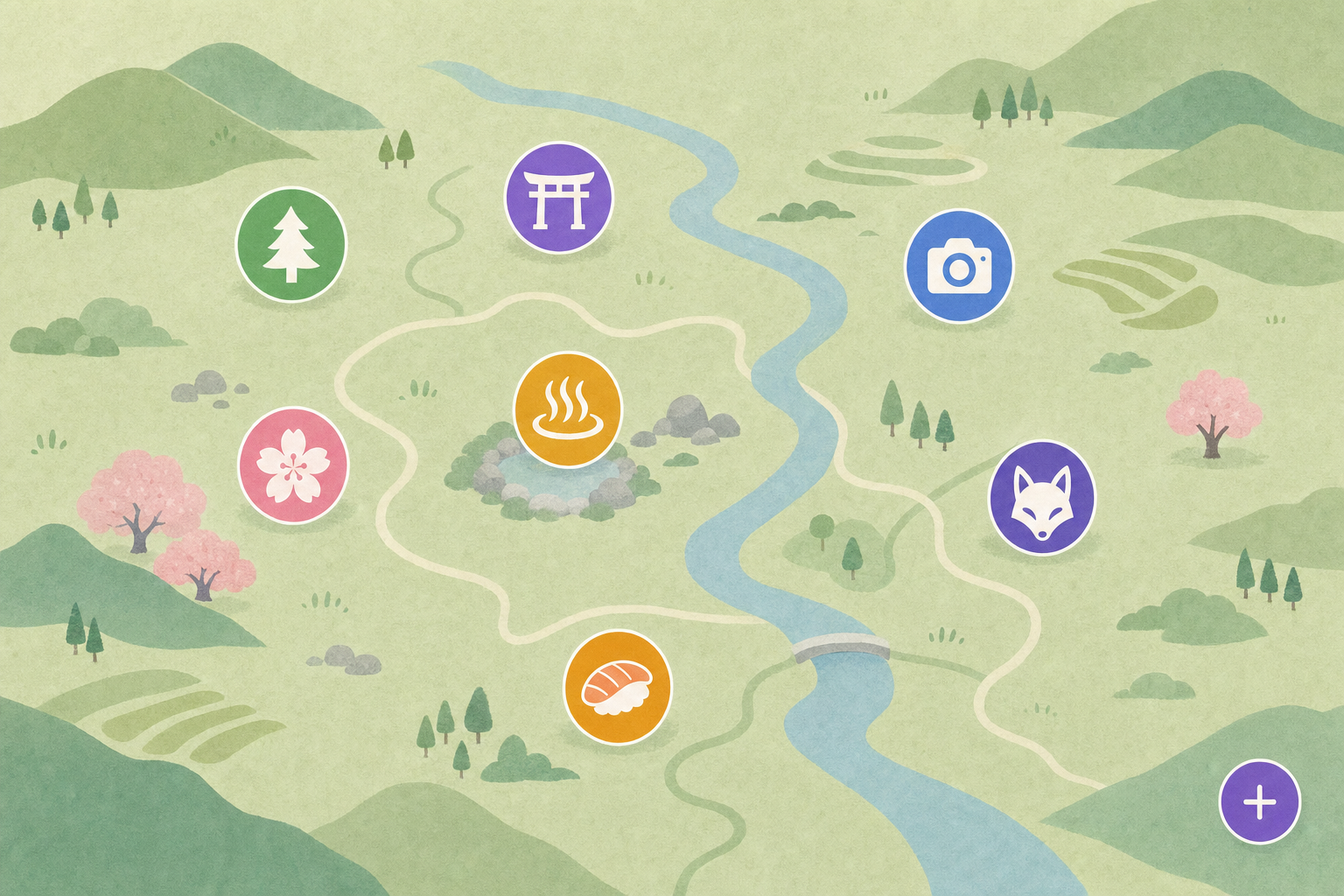
So the first move is simple: make one map for the destination, and keep it open. Every time a place crosses your radar, drop a pin. Don't organize yet. Don't plan. Just capture.
Capture first, judge later
The biggest mistake is filtering too early. You hear about a place, think "eh, maybe," and don't save it. Three months later you can't remember it at all.
Save everything. A pin costs nothing. The whole point of collecting over months is that you don't yet know which places will matter. Your sense of the trip changes as it fills in. The ramen shop you almost skipped becomes the anchor of a whole day once you realize three other things you want are on the same street.
When a place looks interesting, add it. Give it a quick note while the context is fresh: "recommended by Mei, supposedly the best one," or "only open weekends." Future-you will thank present-you.
Let structure emerge
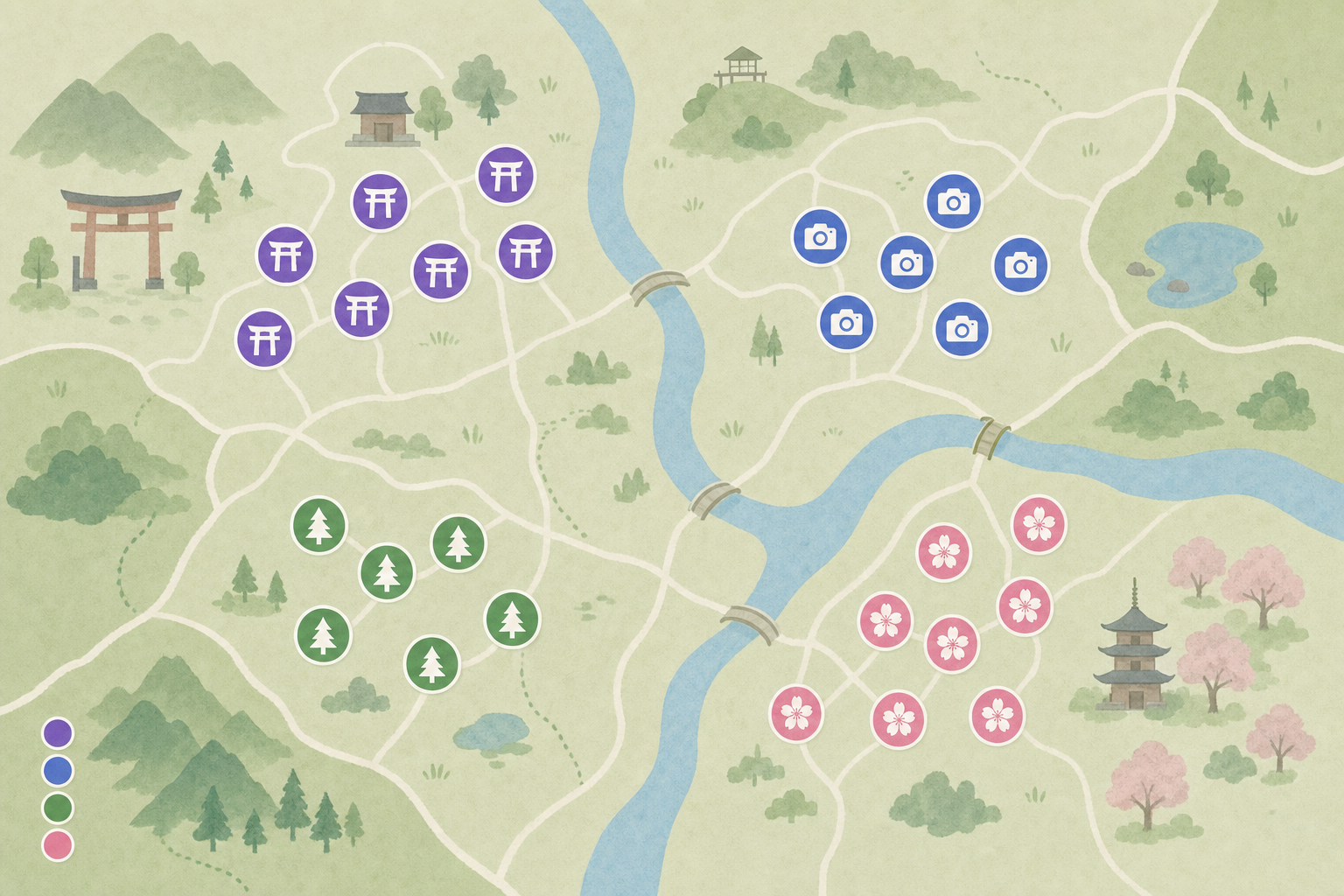
After a few weeks, your map stops being random dots. Clusters appear. You'll notice five things bunched in one district and realize that's a day. You'll see an outlier two hours away and decide it's worth its own trip, or not worth it at all.
This is when light organization pays off:
- Folders to group by area or theme: "North Kyoto," "Food," "If we have time."
- Statuses to mark how committed you are: must-see, maybe, backup. Color tells you at a glance what's locked in and what's optional.
- Filters to cut the noise: hide the maybes and look at just the anchors when you're sketching the route.
You're not building an itinerary yet. You're letting the shape of the trip reveal itself.
Turn the map into a trip
A month or so out, the map is full and the clusters are obvious. Now it becomes an itinerary.
Group the pins into days that make geographic sense: things that are near each other belong on the same day. Order them so you're not crossing the city twice. Add the practical stuff: opening hours, a lunch spot between two morning sights, where you're sleeping each night.
This is the step that turns "places I like" into "here's what we're doing Tuesday." And because every decision is built on months of quiet collecting, it takes an evening, not a panicked week. The trip was always there in the map. You're just reading it off.
Why slow planning wins
Planning over months isn't about doing more work. It's about doing less work at the worst possible time (the stressed weeks before a trip) by spreading the easy, enjoyable part across all the calm months before.
You end up with a trip that's genuinely yours: shaped by everything you stumbled across, not whatever ranked first on a search the night before you booked. And the map doesn't disappear when you get home. It becomes a record of where you went, ready for the next person you send there, or the next trip you start collecting for.
So start the map today, even if you have no dates and no plans. Drop one pin. Then drop another whenever something catches your eye. Months from now, the trip will mostly plan itself.
Start your own map
Save the places you want to visit, organize them your way, and plan the trip, free.