
How to Plan a Trip to Japan, Step by Step
Japan rewards the well-prepared traveler more than almost anywhere. Here's a calm, repeatable way to do it. Collect spots as you research, organize them by area, and turn the map into a day-by-day route.
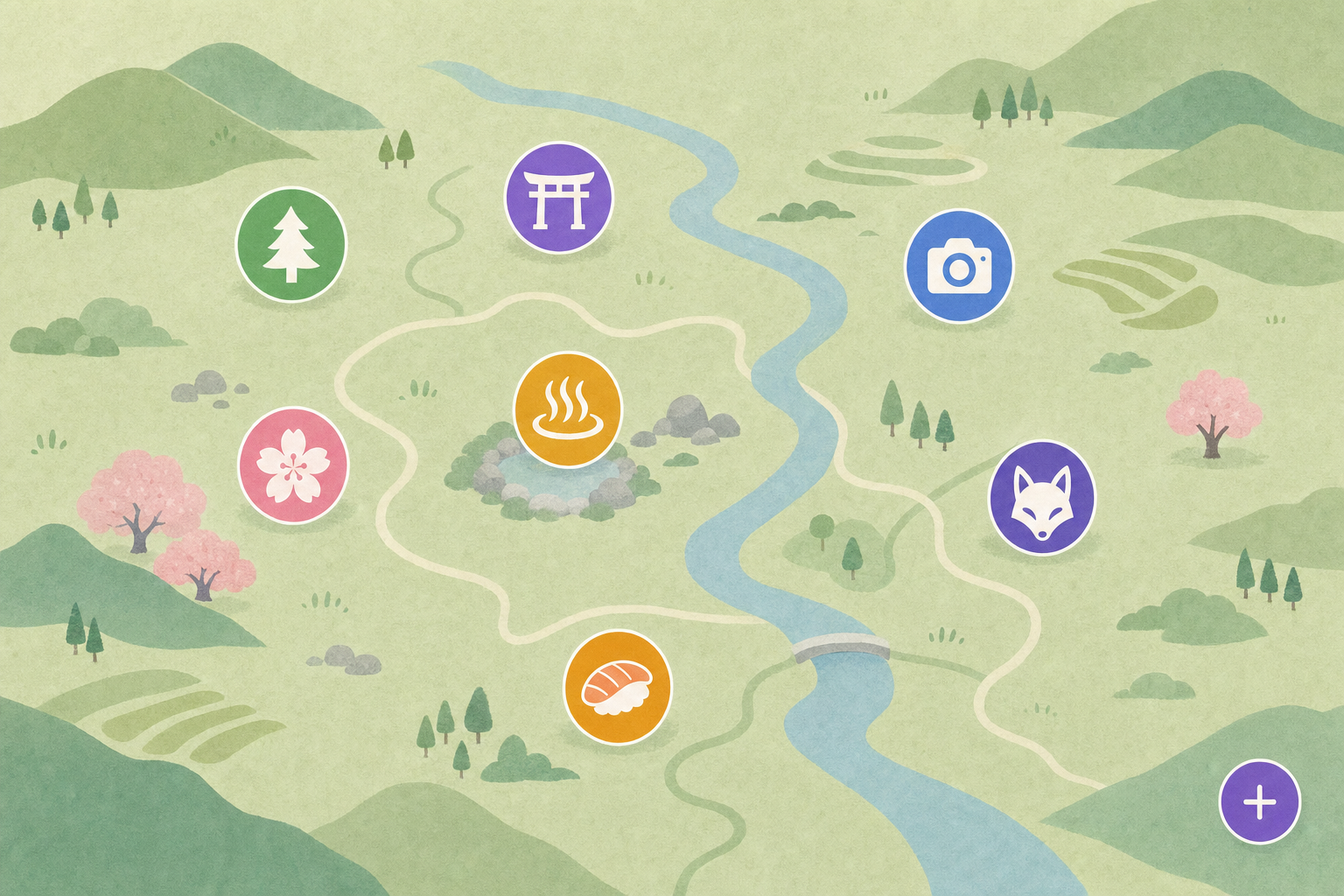
Japan is one of the most rewarding countries to travel, and one of the easiest to plan badly. There's almost too much to see, it's spread across a long thin archipelago, and the best things are often tucked one alley over from the famous thing everyone photographs. A spreadsheet won't save you. A map will.
Here's the step-by-step approach I use for every Japan trip. It works whether you have one week in Tokyo or three weeks from Hokkaido to Okinawa.
Step 1: Start a map and drop pins as you research
Before you book anything, make one map for the whole trip and keep it open in a tab. Every time something catches your eye, drop a pin: a shrine from a film, a ramen shop a friend swears by, a viewpoint from someone's photos.
Don't filter, don't plan, don't worry about whether it "fits." Just capture. The goal at this stage is coverage: get everything you might care about onto the map so you can see it all in one place.
Within a week or two, the map stops being empty and starts telling you something. You'll see where your interests cluster, and where they don't.
Step 2: Save each spot the moment you find it
The single habit that makes Japan planning easy is saving places immediately, with a quick note while the context is fresh. "Recommended by Mei, supposedly the best matcha in Uji." "Only lit up at night." "Closed Tuesdays."
In Ikuzo you search the place, drop the pin, and it's saved with its real location and a photo. Six months later you won't remember why you saved it, but your note will.
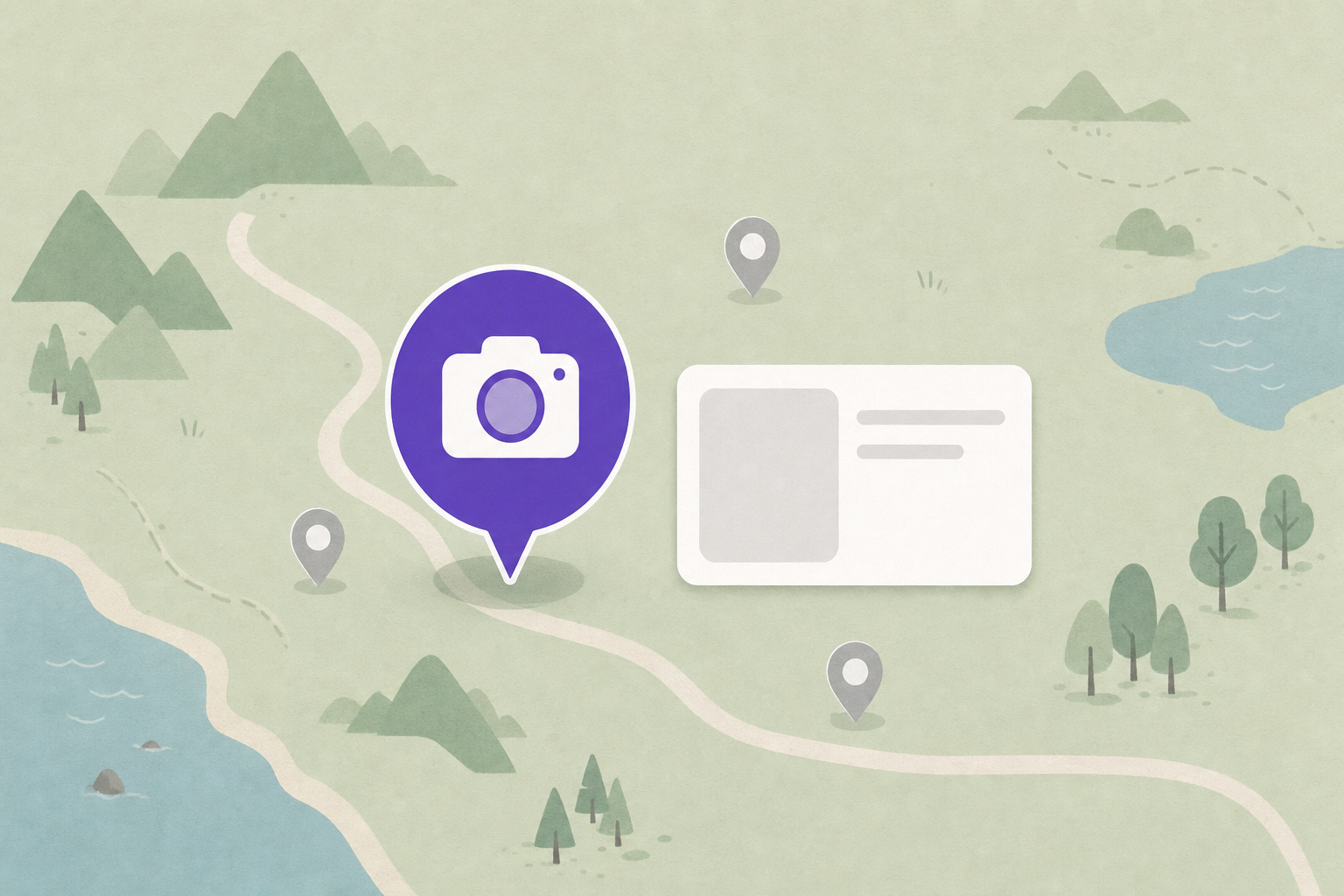
This is the difference between a list of names you can't decode later and a map you can actually plan from.
Step 3: Organize by area and by how much you care
After a few weeks your map is full, and now light organization pays off. Two moves do almost all the work:
- Folders by area: Kyoto, Tokyo, Kansai day trips, "if we have time." Japan travel is regional; grouping by area is how you'll actually move through it.
- Statuses by commitment: mark the must-sees, the maybes, and the backups. Color tells you at a glance what's locked in and what's optional.
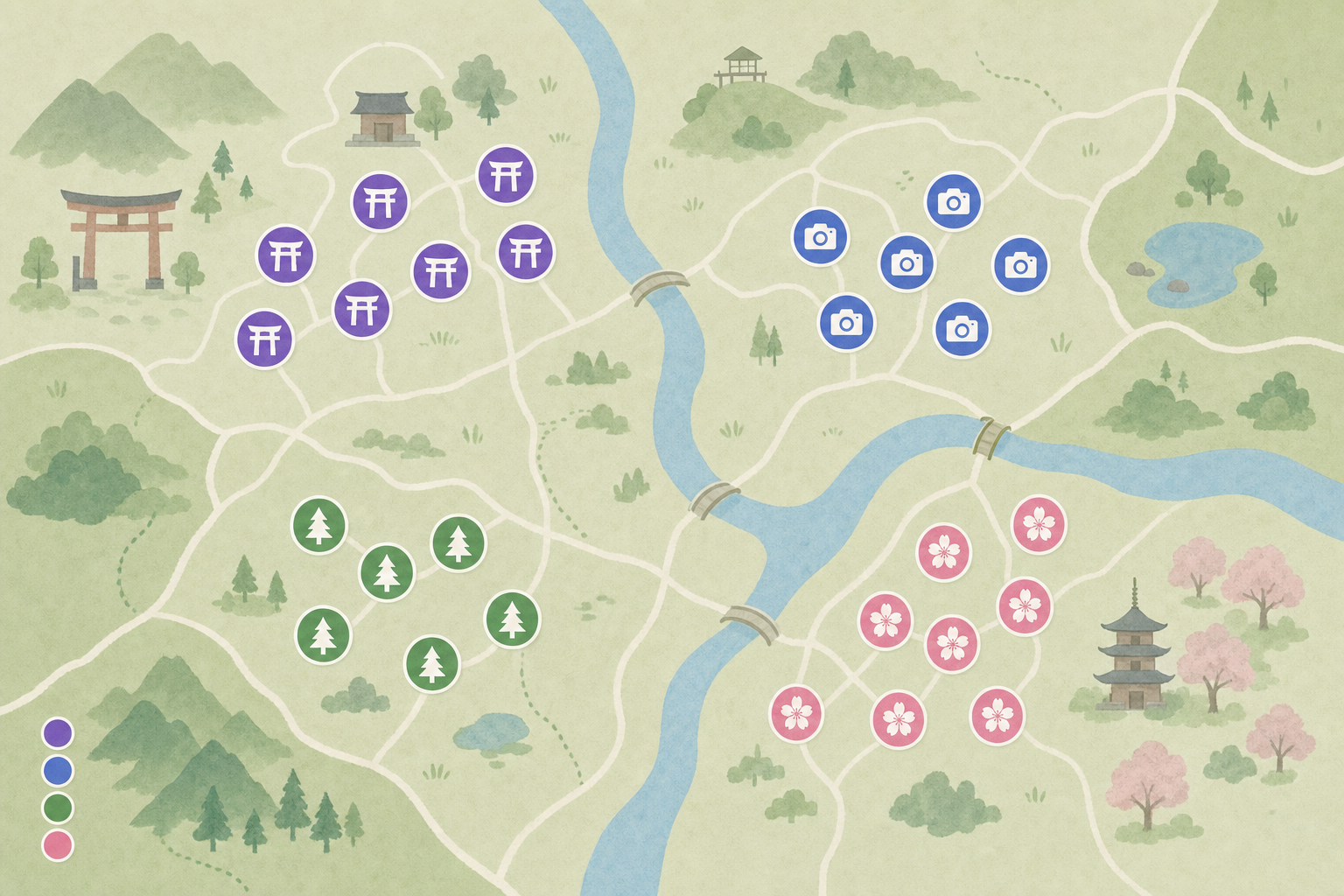
Now you can filter. Hide the maybes and look at just your anchors when you're sketching the route. The trip's shape (which cities, how many days each) falls out of the clusters almost on its own.
Step 4: Turn each city into a day-by-day route
This is where a pile of pins becomes an itinerary. Group the spots in each city into days that make geographic sense (things near each other belong on the same day), then lay each day out as a route.
The moment you draw the line between your stops, the problems jump out: a day that doubles back across the city, two places you'd put on different days that are actually a five-minute walk apart. Drag the stops into a better order and watch it redraw. Add transport mode and you'll see the real distance and time for the day.
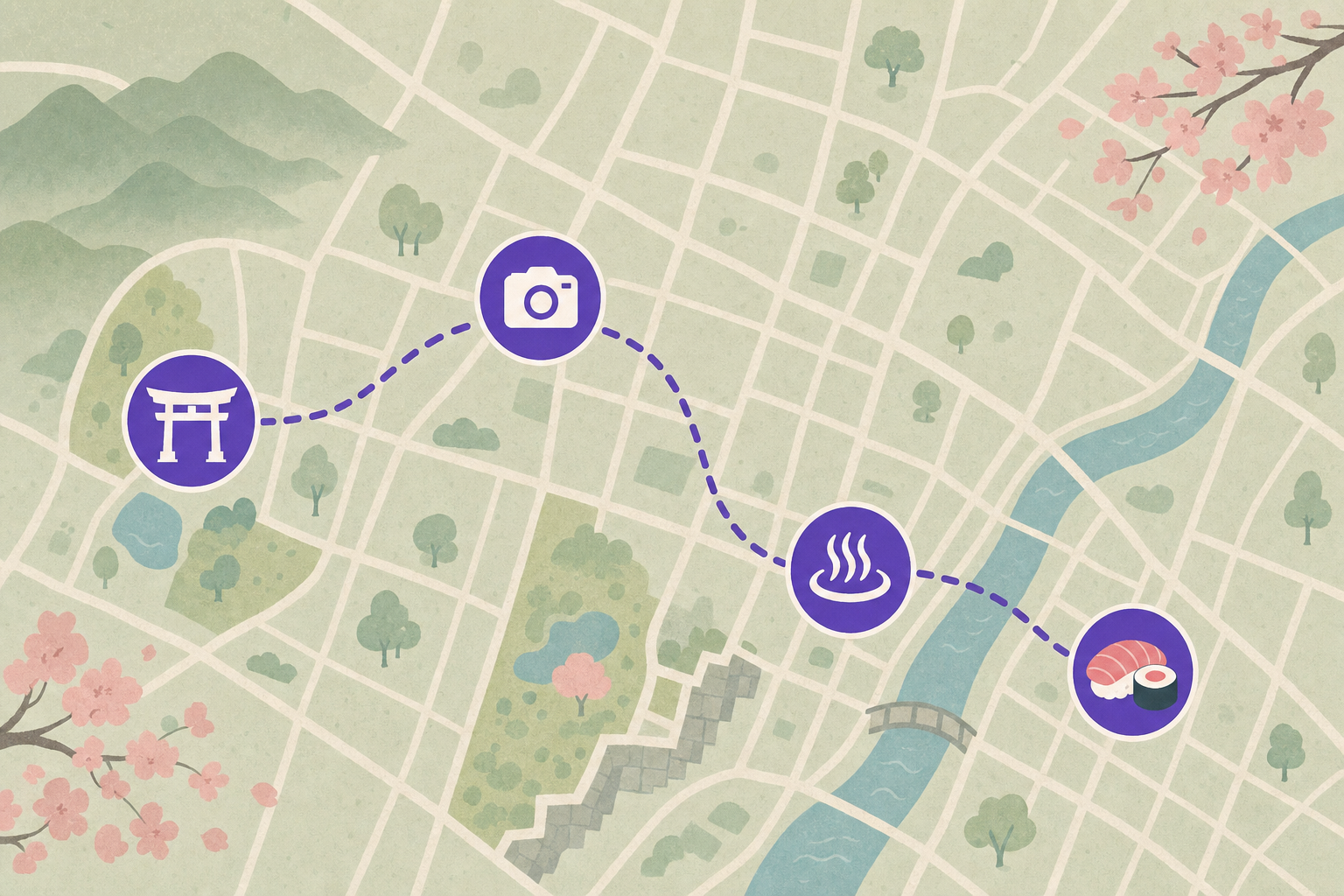
A useful rule for Japan: pick two or three anchors per day and leave room around them. Trains are punctual and walking is constant; days fill up faster than they look. A relaxed plan beats a packed one every time.
Step 5: Share it, or take it on the road
When the map is done, it's not just yours to keep. Make it public and anyone you're traveling with can open it, and logged-in friends can copy the whole thing (spots, folders, and all) into their own account to build on.
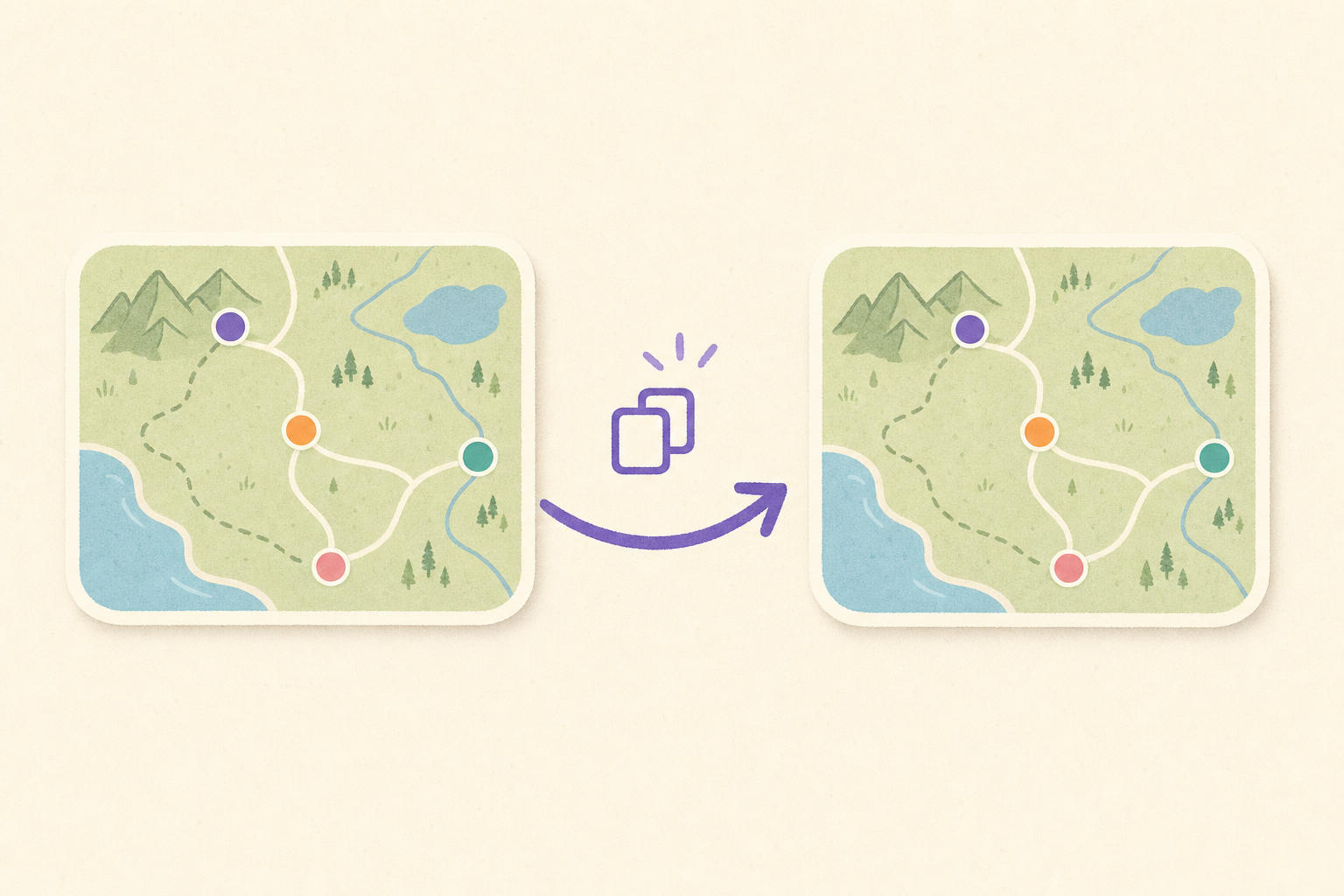
And on the trip itself, the map earns its keep daily. Standing in an unfamiliar neighborhood, you open it, see what you saved nearby, and instantly know whether the good coffee is left or right. No frantic searching, just the quiet confidence of a plan you built slowly.
The whole loop, one more time
Collect as you research. Save the moment you find it. Organize by area and status. Route each city. Share and go. None of these steps is hard, and because you spread the easy part across all the calm months before the trip, you arrive in Japan with a plan that feels effortless, and a map you'll send to the next person who asks "so where should I go?"
Start the map today, even with no dates booked. Drop one pin. Japan has a way of filling the rest in.
Start your own map
Save the places you want to visit, organize them your way, and plan the trip, free.